Assembly Bill 1572 and Nonfunctional Turf: Planning Ahead for Commercial Properties
A lawn outside your office building may seem like a minor detail until a shift in water regulations turns it into a major property planning decision. Which areas can you continue watering? What should replace decorative grass? How do you manage conversion costs without compromising curb appeal?
For suburban Bay Area commercial properties, California’s nonfunctional turf law deserves a primary spot on the capital planning calendar. Reviewing your landscaping now ensures ample time to make informed choices before commercial property restrictions take effect on January 1, 2028.
What AB 1572 Changes for Commercial Properties
Assembly Bill 1572 prohibits using potable (drinking) water to irrigate nonfunctional turf at covered properties. This includes commercial, industrial, and institutional sites, with an exception for cemeteries. Crucially, the law restricts irrigation; it does not explicitly mandate digging up existing grass.
The State Water Resources Control Board defines nonfunctional turf as mowed grass that serves a purely aesthetic purpose rather than a recreational or community function. Common examples include grass in parking lot islands, along street rights-of-way, or behind barriers that prevent pedestrian access.
Conversely, grass used for active recreation or community gatherings is treated differently. However, accessibility alone does not automatically make a lawn functional. If an area’s classification is unclear, check with your local water supplier for guidance.
Why Suburban Owners Must Act Early
While a downtown high-rise with no lawn has little turf to worry about, a suburban office park surrounded by ornamental grass faces a comprehensive evaluation. The impact of this law depends on your landscape’s layout and usage rather than its street address.
For property owners, family offices, and fiduciaries, the immediate challenge is determining scope. Transforming a landscape requires irrigation adjustments, contractor coordination, and updated maintenance strategies. Early review allows you to absorb these capital expenditures naturally into your broader multi-year property budget.
Real estate developer Donald Bren once described gifts of preserved land as “an investment in our future.” While he was referring to open-space conservation, the underlying principle applies directly here: landscape decisions must reflect what a property will require over the long haul.
Related: How to Evaluate a Commercial Property Beyond Market Value
The 2028 Deadline and Compliance Audits
The statewide irrigation restriction goes into effect on January 1, 2028, for all commercial properties. Additionally, covered commercial owners with more than 5,000 square feet of irrigated land must submit a compliance certification to the State Water Board starting June 30, 2030, and every three years thereafter through 2039.
The 5,000-square-foot threshold applies only to the reporting requirements, it is not an exemption from the 2028 watering ban for smaller landscapes. To ensure compliance, maintain clear records of your irrigation sources, turf classifications, and completed upgrades. Be sure to verify any additional local requirements with your municipal water provider.
A Practical 3-Step Action Plan
Conduct a Site and Irrigation Audit:
- Map zones and protect existing assets.
- Map all turf areas and document how they are used.
- Identify whether irrigation relies on potable or recycled water.
- Check whether shared irrigation lines feed both grass and mature trees.
California’s Water Code permits potable water use where necessary to protect trees, non-grass perennials, or health and safety. Never shut off a shared irrigation zone without assessing tree health first. Recycled water is exempt from the prohibition, but local availability must be confirmed.
Design Property-Specific Upgrades:
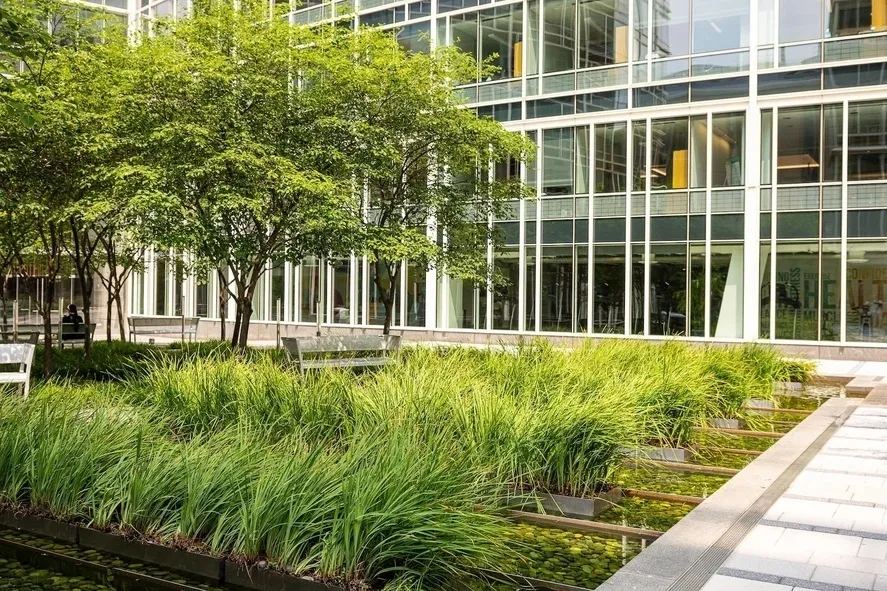
Balance aesthetics with drought resistance. Where conversion makes sense, transition to climate-appropriate native plants, mulch, and drip irrigation. Focus on preserving clean entryway sights, safe pedestrian paths, and a polished appearance. Remember that drought-tolerant landscaping still requires consistent care during the initial plant establishment phase.
Budget for Conversion and Maintenance:
Plan for upfront and long-term costs. Request comprehensive vendor proposals covering site preparation, planting, irrigation overhauls, and ongoing care. Check with your local water agency about rebates, conversion incentives, or pre-approval requirements before breaking ground.
Related: Deferred Maintenance in Commercial Property
How Thoughtful Property Management Helps
Effective commercial property management bridges the gap between landscape decisions, contractor oversight, tenant communication, and financial forecasting. For fiduciaries, documenting the rationale behind these upgrades also demonstrates sound stewardship of the asset.
“A successful landscape transition begins with a deep understanding of the site. The goal is to meet state requirements while protecting mature trees, curb appeal, and ownership’s long-term interests.”
Marty Smith, Founder & Principal, Westvale CRE
Preparing for the 2028 deadline begins with understanding how your landscape is used and watered. A review now can help you identify necessary changes, plan the expense, and coordinate improvements with scheduled property work. With thoughtful preparation, you can meet the requirements while preserving the appearance and everyday function of your property.